
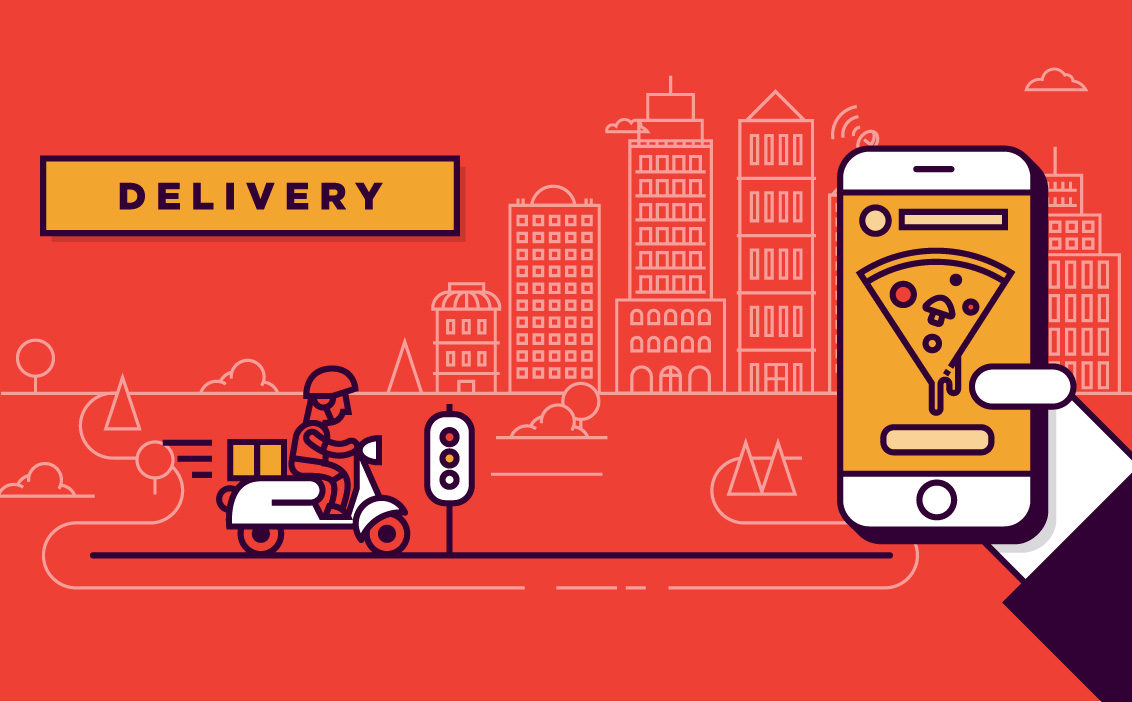
As our client, TGI Fridays International, can attest, online food delivery platforms are expanding choice and convenience, allowing customers to order from a wide array of restaurants with a single tap of their mobile phone.
The business of delivering restaurant meals to the home is undergoing rapid change as new online food delivery platforms race to capture markets and customers across the Americas, Asia, Europe, and the Middle East. Although these new Internet platforms are attracting considerable investment—several are already valued at more than $1 billion—there is little real knowledge about market dynamics, growth potential, or customer behavior.
The shape of the market today
By far, the most common form of online food delivery is the traditional model, in which the consumer places an order with the local pizza parlor or Chinese restaurant (although many other kinds of restaurants, particularly in urban areas, now offer delivery) and waits for the restaurant to bring the food to the door. This traditional category has a 90 percent market share, and most of those orders—almost three-quarters—are still placed by phone. However, as in so many other sectors, the rise of digital technology is reshaping the market. Consumers accustomed to shopping online through apps or websites, with maximum convenience and transparency, increasingly expect the same experience when ordering dinner.
Two tiers for online food delivery
Two types of online food delivery platforms have risen to fill that void. The first type is the “aggregators,” which emerged roughly 15 years ago; the second is the “new delivery” players, which appeared in 2013. Both allow consumers to compare menus, scan and post reviews, and place orders from a variety of restaurants with a single click. The aggregators, which are part of the traditional-delivery category, simply take orders from customers and route them to restaurants, which handle the delivery themselves. In contrast, the new delivery players build their own logistics networks, providing delivery for restaurants that don’t have their own drivers. Why is this last point important? This allows restaurants that previously didn’t offer delivery services the ability to do so. These restaurants are outsourcing to stay in the game and remain relevant to today’s consumers. A perfect example is Chipotle. It’s no secret that Chipotle is huge among Millennials, but its one major weakness is the lack of delivery. Chipotle began delivering via Postmates in March of 2015, a big news story that excited many people. In the first month, they saw a whopping 30% increase in online orders! They now have a delivery page on their website that lists all their delivery partners.
Tier 1 – Aggregators
Aggregators build on the traditional model for online food delivery, offering access to multiple restaurants through a single online portal. By logging in to the site or the app, consumers can quickly compare menus, prices, and reviews from peers. The aggregators collect a fixed margin of the order, which is paid by the restaurant, and the restaurant handles the actual delivery. There is no additional cost to the consumer. Four players—Delivery Hero, Foodpanda, GrubHub, and Just Eat—have achieved global scale. At the national level, there are typically two or three competitors that dominate, largely due to their ability to build a large user base.
Tier 2 – New delivery
Just like aggregators, new delivery players allow consumers to compare offerings and order meals from multiple restaurants through a single website or app. Crucially, the players in this category also handle the restaurant’s logistics. This allows them to open a new segment of the restaurant market to home delivery: higher-end restaurants that traditionally did not deliver. Players include global brands such as Deliveroo and Foodora.
The new online food delivery opportunity
The opportunity for new delivery is to extend food delivery to a new group of restaurants and customers. Rather than competing directly with the aggregators, new delivery players are expanding the overall market. However, it is possible that in the future even lower-end traditional-delivery restaurants will migrate to new delivery because they will find it more cost-efficient to outsource logistics; thus, new delivery poses at least a potential threat of disruption to the aggregators. The growth in new delivery is driven by two sources of consumer demand. The first is a substitute for dining in a restaurant. With new delivery, consumers can dine at home with the same quality food they would enjoy at a fine restaurant. Some platforms even include Michelin-starred establishments in their offerings in selected cities. The second source of demand is as a substitute for meals prepared and consumed at home.
Customer behavior
Customers drawn to the new online food-delivery platforms have a different set of needs and expectations from those of traditional pizza customers. A McKinsey study uncovered the following important traits:
- Platforms are sticky. New delivery platforms that personalize the ordering experience by storing relevant customer data are sticky. Once customers sign up, 80 percent never or rarely leave for another platform, creating a strong winner-take-all dynamic in which the reward goes to the player who can sign up the most customers in the shortest time.
- Time is critical. Speed of delivery is the biggest variable in customer satisfaction, with an average of 60 percent of consumers across markets citing it as a key factor. The optimal wait time is no more than 60 minutes.
- Meals are for home. Most orders—82 percent—are placed from home, while only 16 percent are placed from the workplace.
- Orders spike on weekends. The highest-volume days for the online platforms are Friday, Saturday, and Sunday, when 74 percent of orders are placed.
The bottom line
It seems clear there is still rapid growth ahead for these online food delivery players. Marketers who find ways to leverage these platforms effectively will have the opportunity to establish themselves in consumers’ minds. If you’re looking for ways to harness these platforms for your restaurant brand, contact us to get an individualized assessment. We’ve got a digital team with extensive experience in mobile and web development that can get you started. Read more about restaurant apps here

